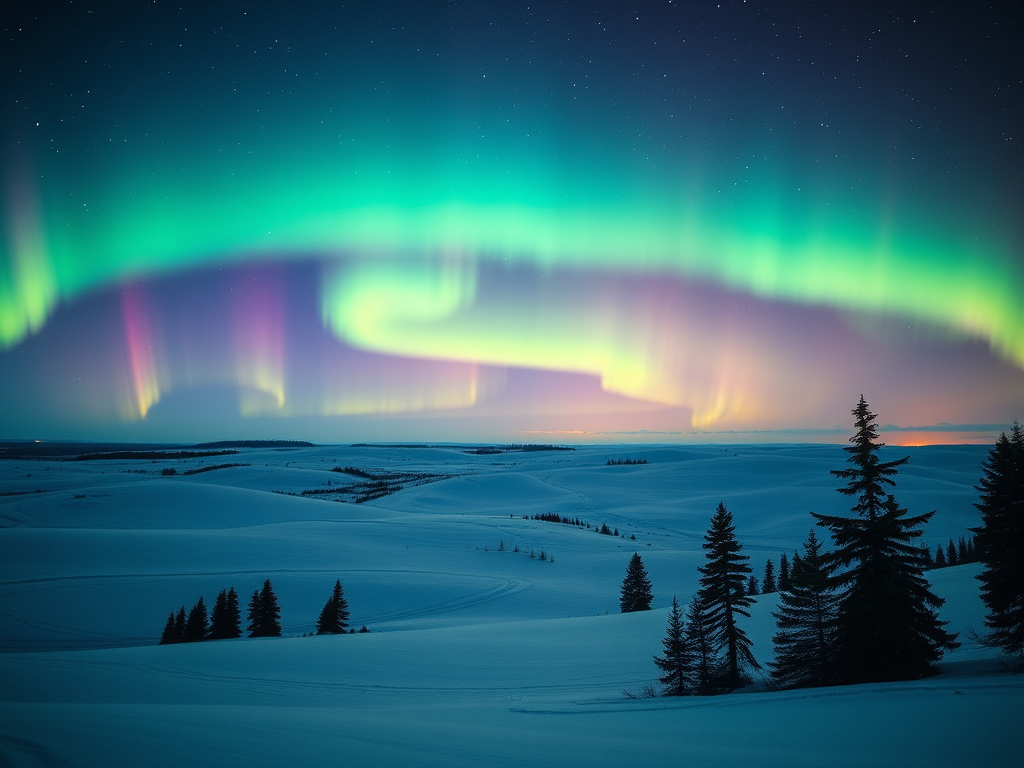
Chasing the Aurora Borealis in Saskatchewan is an adventure like no other. Imagine standing under the vast, open skies of the prairies, where the horizon stretches endlessly, and the night is alive with swirling colors. The northern lights, or aurora borealis, are one of nature’s most spectacular displays, and Saskatchewan’s dark skies provide the perfect canvas. But how do you predict this elusive phenomenon, and what stories do these lights hold? Let’s journey into the science and lore of the aurora.
The northern lights occur when charged particles from the sun collide with Earth’s atmosphere, creating a vibrant dance of colors. While these lights can appear at any time, they’re most visible during periods of heightened solar activity, often referred to as solar storms. In Saskatchewan, where light pollution is minimal in rural areas, the aurora can be seen in all its glory, especially during the long nights of winter. To catch a glimpse of this phenomenon, you need to plan carefully.
Start by checking aurora forecasts, which are available on websites like SpaceWeatherLive or through apps like Aurora Alerts. These tools provide real-time updates on solar activity and help you determine the best times to look up. One key metric to watch is the KP Index, a scale that measures geomagnetic activity. When the index reaches 4 or higher, your chances of seeing the lights increase dramatically. But even the best forecasts are only part of the equation. Clear, dark skies are essential, so rural areas or Dark Sky Preserves such as Cypress Hills Interprovincial Park or Grasslands National Park are ideal spots. Winter nights, particularly between October and March, offer the best opportunities. Patience is crucial; the aurora often peaks between 10 PM and 2 AM, but the lights can surprise you at any hour.
While the science of the northern lights is fascinating, their beauty also inspires wonder and storytelling. Indigenous peoples of the prairies have long held beliefs about the aurora, weaving them into their cultural narratives. For some Cree communities, the lights are seen as spirits of ancestors dancing joyfully across the sky. This connection between the earthly and spiritual realms reminds us of the deep interconnectedness of all life. Another Cree legend describes the aurora as a cosmic ball game, where spirits play with a walrus skull as the ball, their trails lighting up the heavens.
In northern cultures, the lights were often interpreted as omens. Bright, active displays might signal conflict or upheaval, while softer, more tranquil lights could bring messages of peace. Some traditions caution against whistling at the lights, believing it could summon spirits or invite misfortune. For the Dene people, the aurora was thought to guide spirits to the afterlife, its movements reflecting the spirits’ joyful journey. These stories, passed down through generations, add a rich layer of meaning to the experience of watching the northern lights.
To truly appreciate the aurora, immerse yourself in the moment. Bundle up warmly, bring a thermos of hot chocolate, and head out to a quiet spot far from city lights. If you’re a photographer, set up a tripod and experiment with long-exposure shots to capture the magic. But don’t forget to pause and simply watch. The beauty of the aurora lies not just in its colors and shapes but in its ability to connect us—to nature, to history, and to one another.
So, the next time solar activity spikes and the skies are clear, take a journey into the prairies. You’ll not only witness one of nature’s greatest spectacles but also become part of a timeless tradition of awe and storytelling. The northern lights are more than just a light show; they’re a bridge between science and wonder, past and present, earth and sky.



 Sandals and Parkas
Leave a comment